
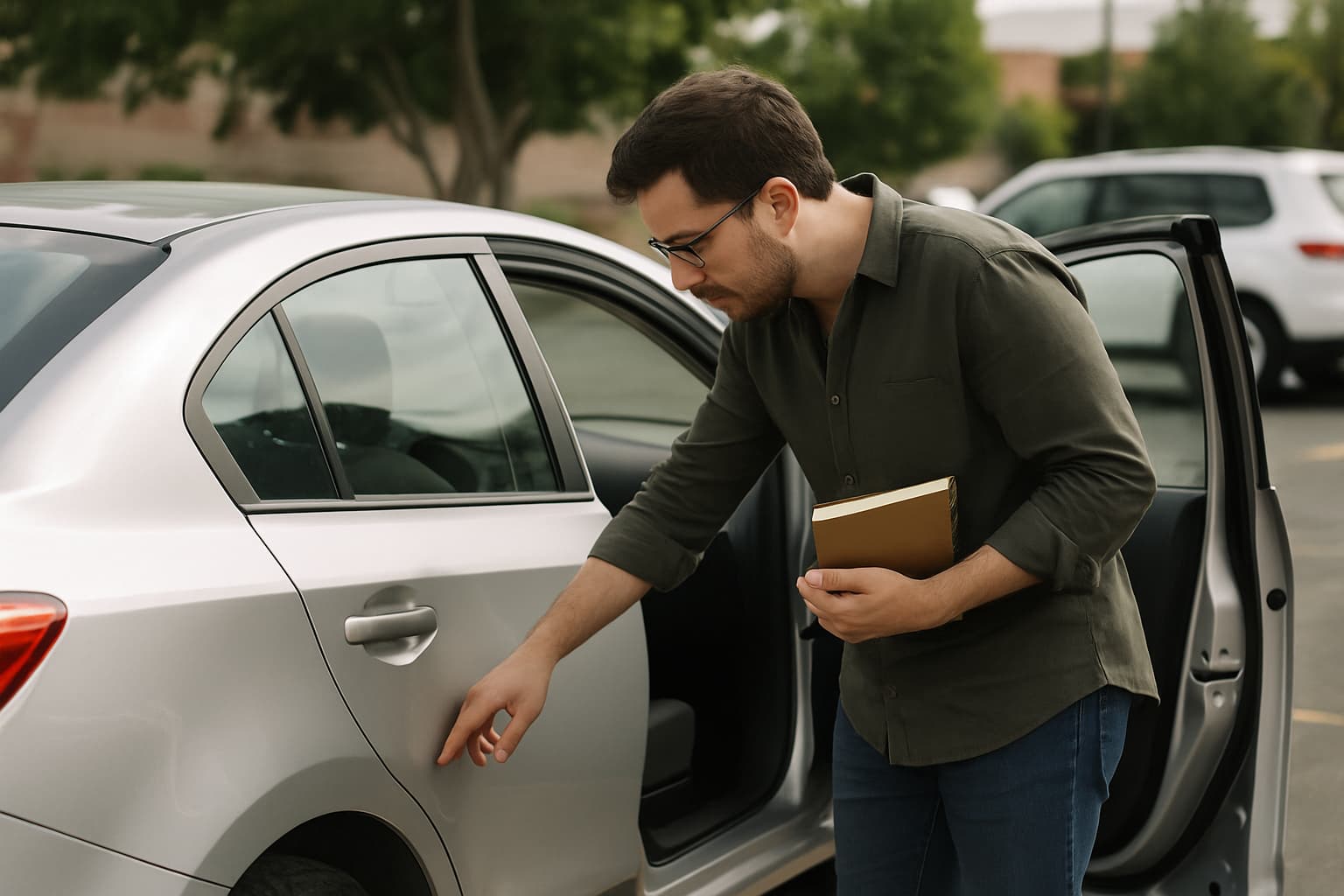

If you are looking at a used Nissan Versa, check the CVT first and find out whether the car worked for Uber or DiDi. On this model, a manual-transmission car with a clear service history is often a safer buy than a cheap CVT with missing records.
The Versa sold in huge numbers in Mexico, which means the used market has everything from well-kept family cars to tired ride-hailing units and quick cosmetic flips. Before you visit one, it helps to bring a used car inspection checklist so you do not miss the basics.
The CVT is the main trouble spot
On automatic Versas, the issue owners and mechanics most commonly talk about is the CVT. The warning signs do not always show up in the first minute of driving; they often appear once the car is warm, in stop-and-go traffic, on an uphill pull, or after a longer test drive.
What to feel on the test drive
- Jerking when pulling away or slowing down.
- Delayed response from a stop when you press the accelerator.
- Revs climbing too much without matching forward movement.
- Vibration or humming that feels out of place.
- Loss of power when hot or a sense that the transmission is protecting itself.
Try it when the car is cold, then drive it again once it is fully warm. If the seller only allows a very short spin or avoids traffic and hills, treat that as a warning.
Signs of weak maintenance
A healthy CVT depends heavily on correct service and how the car was used. Ask for service invoices or workshop records that show transmission maintenance, and look for leaks, unusual noises, or signs of improvised repairs.
“It drives fine” is not enough. If the transmission already shows heat-related symptoms or jerking, the fix can be expensive and the result is not always as dependable as before, so that risk should weigh heavily in your decision.
| Sign | What it may mean |
|---|---|
| Jerks from a stop | Possible CVT wear or inconsistent operation. |
| Fine when cold, worse when hot | A common red flag on stressed CVTs. |
| Delay engaging D or R | Do not treat it as normal on a “well-kept” car. |
| Constant humming | Worth a deeper inspection before moving forward. |
How to spot a former ride-hailing Versa
Many Versas were used for Uber or DiDi because they are efficient and easy to service. That does not automatically make them bad cars, but it usually means more engine hours, more braking, more potholes, and more heat cycles than a private car with the same odometer reading.
The bigger problem is that some are advertised as personal-use cars even after years on a platform. That is why you need the story, the wear, and the paperwork to make sense together.
Common signs of heavy-duty use
- Glossy, heavily worn steering wheel, shifter, or buttons.
- Driver seat cushion collapsed or loose.
- Worn floor mats, especially on the driver side.
- Trunk carpet marked from frequent luggage or cargo.
- Added wiring, drilled mounts, or traces of phone holders and chargers.
- Rear-seat wear that seems high for a private car.
Also ask about long service periods, frequent brake work, and repeated tire replacement. A former platform car can still be worth buying if it was cared for properly, but the price and your expectations should reflect the harder life it likely had.
Mileage matters only if the wear matches
Low mileage alone does not prove much on a used Versa. What matters is whether it matches the condition of the pedals, steering wheel, seats, shifter, door hardware, tire date codes, and service records.
If you see excessive shine, tired upholstery, or faded buttons on a car that claims very low mileage, consider the risk of altered mileage. Compare the odometer with service receipts, insurance paperwork, inspections, and any document that shows earlier mileage.
This matters even more on a Versa because a former ride-hailing car can look presentable after detailing, while the real wear shows up in small details. When the story does not add up, it usually does not get better with another visit.
When a manual Versa makes more sense
If your goal is to avoid the biggest risk area on this model, a manual Versa is usually the simpler choice. In Mexico, manual gearboxes were common on first-generation Versa cars and later V-Drive versions, especially in lower trims, but you should still verify the exact year and trim of the unit you are considering.
A manual transmission does not make the car perfect, but it does remove the part that creates the most doubt in many used Versas. If you are comparing a well-kept manual against a CVT car with a vague history, the manual is often easier to evaluate and easier to live with.
| If you choose | Focus on |
|---|---|
| Manual Versa | Clutch wear, gear engagement, friction point, leaks, and signs of abuse. |
| CVT Versa | Jerking, overheating, uphill response, proof of service, and hot-drive behavior. |
That does not mean every manual is automatically good. If the clutch engages very high, slips under load, or the gearbox grinds into gear, there is still money to spend. The advantage is that the diagnosis is usually clearer than with an intermittent CVT problem.
Other areas worth checking on the specific car
Beyond the transmission, there are a few things mechanics commonly see on higher-mileage or poorly maintained Versas. None of them is an automatic deal breaker, but they help you negotiate or decide to move on.
- Front suspension: knocks over bumps or a floaty feel.
- Engine mounts: excessive vibration at idle or when shifting into D or R.
- Air conditioning: make sure cooling stays steady and does not change oddly with throttle.
- Cooling system: fans should work properly, with no leaks or coolant smell.
- Brakes and tires: wear should be even; uneven wear can point to suspension or alignment issues.
- Bodywork: paint mismatch, marked bolts, shifted seals, or a trunk and hood that do not line up well.
A well-maintained Versa can be a very sensible used car. A neglected one becomes a pile of small repairs that quickly cancel out the attractive purchase price.
Paperwork and legal checks before you pay
No matter how well it drives, do not close the deal without checking the identity of the car and its paperwork. Make sure the VIN/NIV on the dashboard, body labels, and documents match, and verify the legal status in REPUVE; if you want more context, see this guide on checking REPUVE before buying.
Ask for the invoice chain, endorsements or re-invoices if applicable, registration card, and proof of taxes or fines according to the state. Requirements change by state and over time; if the purchase will be processed in Mexico City, the official ownership-transfer information is on SEMOVI, and other states have their own rules.
A quick decision path for a used Versa
- Rule out structural crash damage, doubtful paperwork, and inconsistent serial numbers first.
- If it is a CVT car, drive it both cold and fully warm; include traffic and a hill if possible.
- Look for ride-hailing clues even if the seller says it was only privately used.
- Make sure wear, mileage, and service history tell the same story.
- If you are choosing between similar cars, the best-documented one is usually safer than the cheapest one.
With a Versa, buyers often focus too much on model year, screen size, or fresh detailing. What matters more is the transmission condition, how hard the car worked, and how clear the real history is.
Frequently asked questions
Do all Versa CVTs fail?
No. Some run well for years, especially with proper maintenance and lighter use. The point is that, in the used market, the Versa CVT deserves stricter scrutiny than many buyers expect because that is often where the biggest repair risk sits.
How can I tell if a Versa was used for Uber or DiDi?
You usually will not prove it with one single document, so you need to read the clues. Heavy wear on the steering wheel and driver seat, marked trunk trim, added wiring, frequent service records, and a vague story are common signs of platform use.
Which is better: manual or CVT?
If both are equally well cared for, it depends on what you want from the car. But if your goal is lower mechanical risk and a simpler inspection, a well-kept manual Versa is often the safer choice in Mexico.
Is a high-mileage Versa still worth buying?
It can be, as long as the wear matches the mileage, the maintenance is documented, and the price makes sense. The bigger concern is not just a high number, but mileage that does not line up with the car’s actual condition or paperwork.
What should make me walk away immediately?
A CVT with clear jerking, heat-related loss of power, inconsistent paperwork, a VIN/NIV mismatch, signs of badly repaired major collision damage, or a seller who avoids basic questions. On this model, walking away early is often cheaper than trying to fix the wrong car later.
If you already have a Versa in mind, you can inspect it with AutoBuddy by uploading photos of the car and its documents to get a report plus a free REPUVE check.